
Leadership Lessons from Women in a First Nations Community-Led Organisation
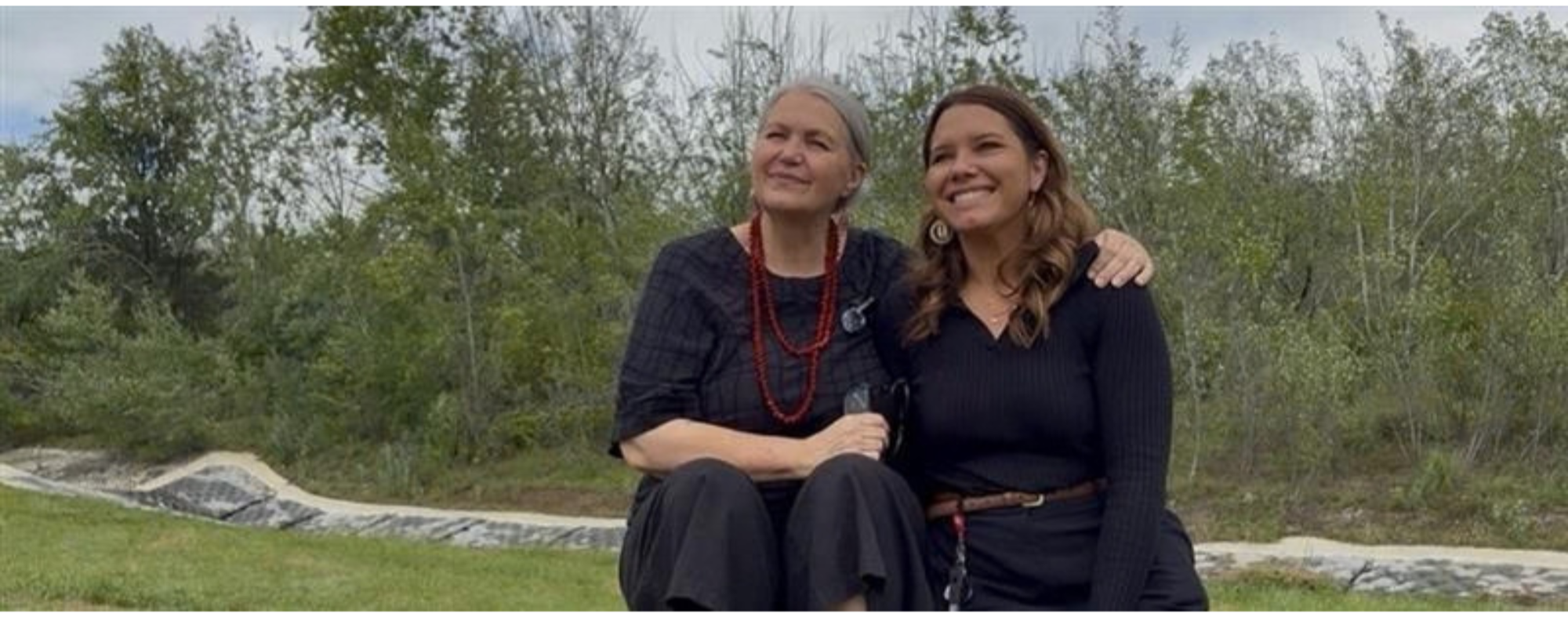
Community First Development CEO Stephanie Harvey and Deputy CEO Renee Cremer during a filming session capturing Stephanie’s insights on a range of topics.
Leadership in a First Nations, community-led organisation carries a deep responsibility to community, culture, and future generations.
To mark the spirit of International Women’s Day, women from across our organisation shared what leading in a First Nations, community-led organisation has taught them, and what advice they would offer to others stepping into community-led work.
Listen to those who came before you
Renee Cremer (Yuin), Deputy Chief Executive Officer
For Renee, leadership begins with deep listening and gratitude for the wisdom shared by senior Aboriginal women.
“Leading in a First Nations, community‑led organisation has reminded me of the importance of listening deeply and carrying a genuine gratitude for the knowledge shared by senior Aboriginal women in our organisation and in community. Their wisdom, lived experience, and cultural authority ground our work.
This lesson matters because, as an emerging leader, I recognise that leadership is not about having all the answers. It is about listening first, honouring those who have walked before you, and being guided by the people and cultures you serve.”
She encourages emerging leaders to let curiosity guide their practice.
“Education, skills, and experience are important - but knowledge lives in many forms. Your capacity to learn, grow, and adapt is just as valuable. Leadership in this space asks you to stay curious, grounded, and open to learning from community, Elders, and experiences around you.”
Renee also reminds emerging leaders to trust their instincts and embrace uncertainty.
“Remember, not having all the answers isn’t a weakness - it’s an opportunity. As emerging leaders, being excited by the unknown opens doors for growth, creativity, and connection.”
2. Leadership means walking alongside people
Renee Tomkinson (Wiradjuri), General Manager Community Development
Renee emphasises that leadership is never about one person - it’s about the strength of the people around you. Relationships, integrity, and trust are at the heart of culturally grounded leadership.
“I’ve learnt that the principles of knowing, being, and doing are far more significant than I first understood. Leading with integrity, respect, and a commitment to building trusted relationships is essential for meaningful outcomes for everyone involved.
Leading in a First Nations, community‑led organisation has taught me that real leadership begins with listening and honouring our people, our staff, volunteers, and the communities we walk alongside.”
She shares the importance of trusting your team and embracing shared accountability.
“Leadership is never about one individual. It is about the strength of the team around us. Building genuine trust and strong relationships matters because we are only as effective as the people we support, empower, and stand beside. This work carries a deep responsibility: to uphold our culture, protect the wellbeing of our people, and ensure everything we do reflects the values, wisdom, and aspirations held within community. Every decision we make carries cultural weight and the potential to either strengthen or weaken trust. Holding this awareness ensures our work remains respectful, collaborative, and truly community‑led.”
Renee also encourages leaders to lead with humility, transparency, and respect.
“Women stepping into leadership roles in community development should lead with humility, deep respect, and a commitment to truly listening. Stay grounded in culture and relationships, and honour the wisdom held within communities. Show up with integrity - how you lead matters just as much as what you achieve.
Seek support from mentors and peers, share the load, and trust your own voice and perspective. And remember we all make mistakes. It’s what we learn from those moments, how we reflect and grow, that shapes us as leaders. Leadership in this space carries a real responsibility to people, culture, and place, so hold that responsibility with care while backing yourself with quiet, humble confidence.”
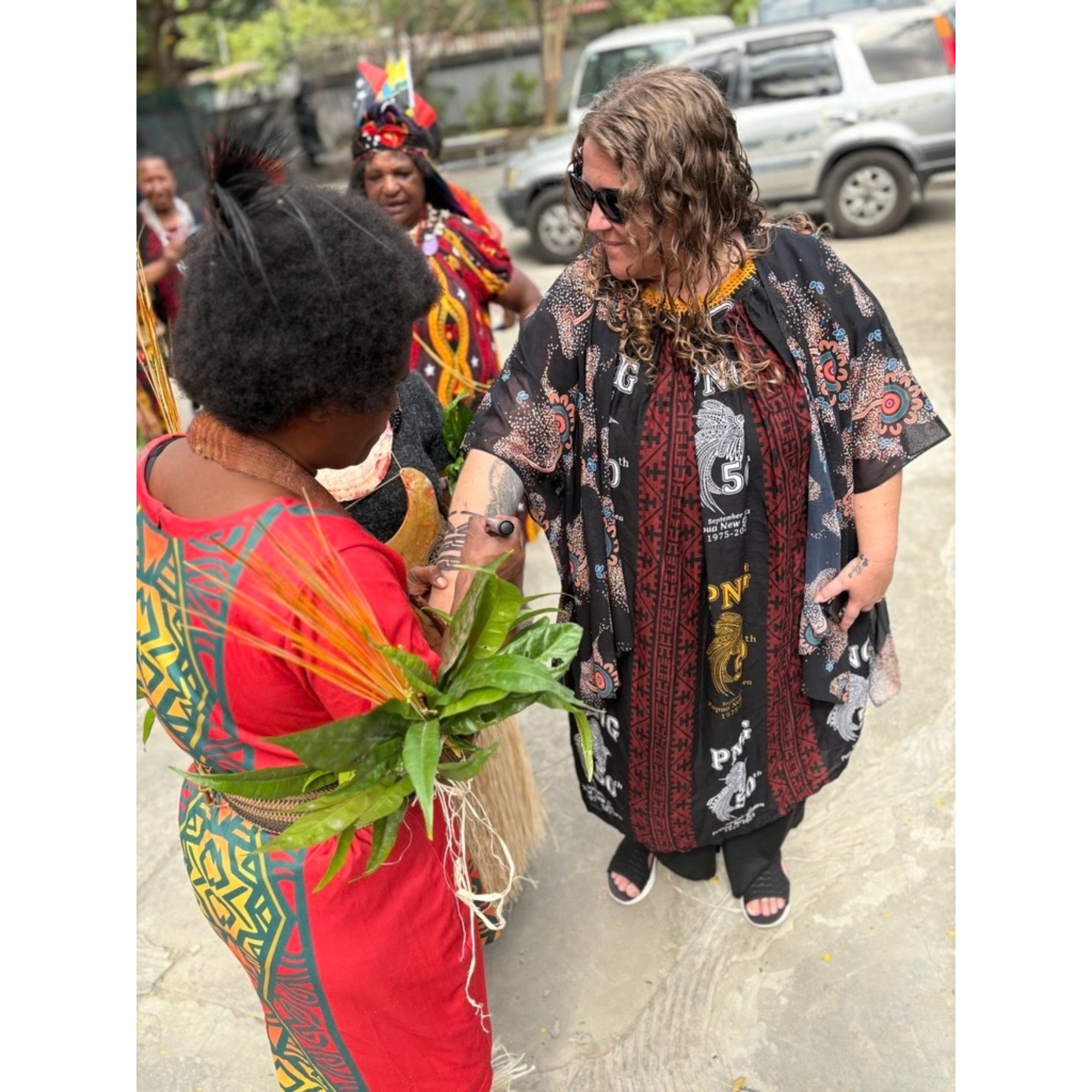
Renee Tomkinson, General Manager Community Development, celebrating 50 years of political independence in Papua New Guinea with our sovereign sister from Advancing PNG: Women Leaders Network.
3. Community must come first
Tania Liddle (Luritja & Gurindji), Regional Manager Northern Territory/ Western Australia/South Australia
Tania emphasises that leadership in community development must always be guided by the priorities of the community.
“It has cemented my belief that listening to Aboriginal people about what Aboriginal people want in their community is the most important thing we can do to assist people to become self-sufficient and self-determined.”
She shares the importance of being respectful, patient, and fully present.
“Community always comes first. Decisions are made with community voices being heard first. This goes hand in hand with relationship building and listening. These are the three most important factors when working within community development.”
Tania reminds emerging leaders that effective leadership requires slowing down, creating space, and truly listening.
“My advice to women stepping into leadership roles in this space is to listen, be respectful, don’t interrupt, and be present. People will not respond if you do not practice those points.”
4. Listen to guide informed action
Dr Ansuya Naguran, Regional Manager Eastern Australia
Leadership, Ansuya explains, is reciprocal: it involves both guiding and being guided by the experiences and perspectives shared with you.
“Being a leader (especially as a non-Indigenous person) in a First Nations, community-led organisation has taught me to listen. There is no strong leadership without deep and active listening. Listening gives me the best opportunity to lead from an informed space, grounded in stories, perspectives, and experiences that have been shared with me.”
She emphasises the importance of building trusting relationships that guide decision-making.
“Leadership starts with the building of strong and trusting relationships within teams and with the communities we work with. We must create spaces of trust where people feel safe to share experiences and perspectives that inform decision-making and determine priorities. Our priorities are always determined by the priorities of communities.”
Ansuya reinforces that leadership decisions should always follow listening.
“Come with openness and a willingness to simultaneously lead and be led. Show up, listen, and then leverage your strengths to support community-led action.”
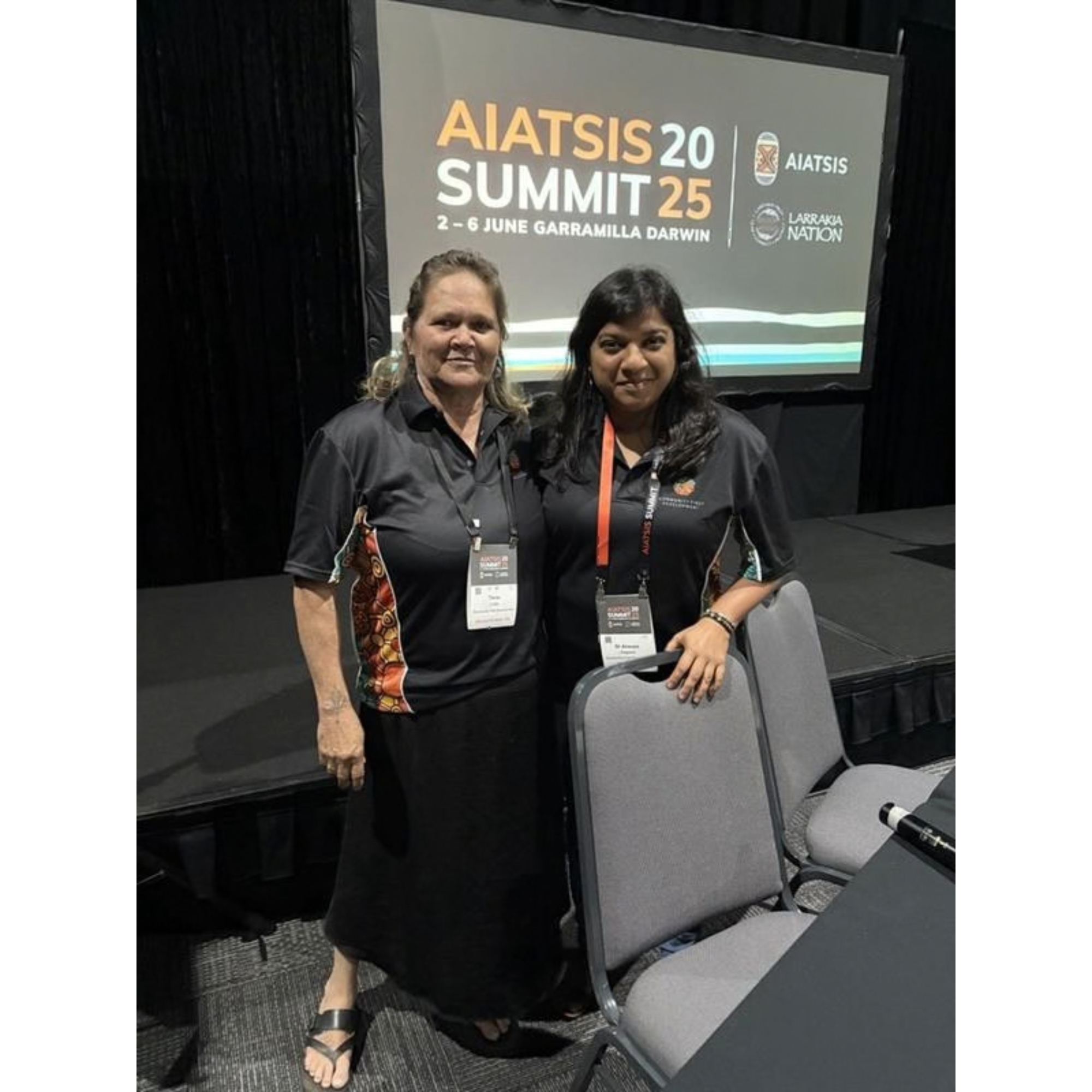
Tania Liddle, Regional Manager NT/WA/SA, and Dr Ansuya Naguran, Regional Manager Eastern Australia, presenting at the 2025 AIATSIS Summit on Larrakia Country.
5. Respect that communities hold the knowledge and solutions
Kathy Farrell, General Manager Supporter Engagement
Kathy highlights that communities hold the final say on projects and stories. Leadership requires ensuring they retain full ownership of their narratives, decisions, and timelines - including the right to pause or decline.
“Leading in a First Nations, community-led organisation has taught me to listen. It’s taught me that leadership is about respecting that communities hold the knowledge and the solutions for their own future. One of the most important things I’ve learned is to support community self-determination. When communities lead, the outcomes are more sustainable and meaningful.”
She emphasises that meaningful relationships take time, patience, and a willingness to adjust pace.
“Leadership is not about rushing; it is about moving at the speed of trust, ensuring community comfort remains paramount. Day to day, this looks like slowing down when needed, creating space for genuine relationships, and making decisions only after consultation. It also means ensuring our suppliers and partners understand and respect how communities work, and that they are supported by us to uphold these principles.”
Kathy encourages leaders to stay grounded in their values and lead with integrity, compassion, and cultural respect.
“My advice is to lead with integrity and respect. Community development means listening deeply and recognising that leadership isn’t about having all the answers - it’s about creating space for others to grow, learn, and lead. Focus on building genuine relationships and trust with communities and stakeholders. Compassion, collaboration, and trust are powerful strengths in this kind of leadership.”
A shared thread
True leadership is listening first - placing community, culture, and relationships at the centre of every decision.