
National Volunteer Week: volunteering in First Nations’ communities
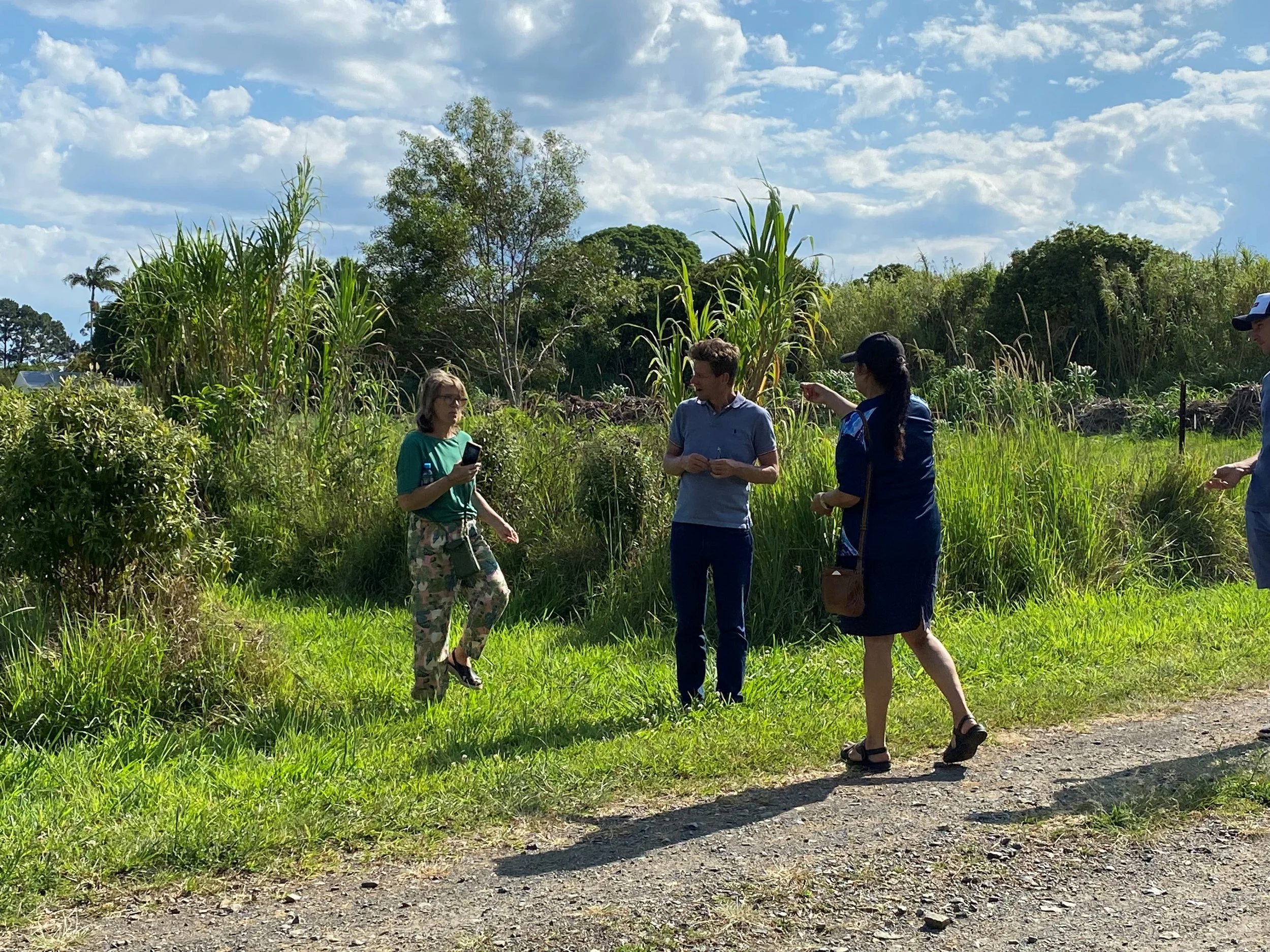
Pictured (left to right): Volunteer Carmen and her husband Rogier being shown around Namabunda Farm by Bundjalung Tribal Society's Manager Melissa
It’s National Volunteer Week.
And we’d like to talk about what volunteering can look like in First Nations’ communities.
Because in communities, volunteering is not simply about showing up to support. It is about being invited in. It is about taking the time to listen, build relationships, and understand what communities are working towards before offering skills, time, or support.
Every First Nations community is different, with its own history, priorities, strengths, and ways of doing. Meaningful volunteering recognises this. It's important to sit down and learn from the people who know their communities best.
When volunteering is guided by community direction, it becomes something much bigger than simply offering support. It becomes an exchange of knowledge, experience, and understanding.
Over time, trust grows. Relationships strengthen. Communities remain in control of the decisions that affect them, while volunteers contribute practical support in ways that communities themselves have identified as useful.
In First Nations’ communities, a community‑led approach to volunteering is essential.
When volunteers are welcomed in and guided by community priorities, something important happens. Trust grows. Relationships strengthen. People learn from one another. And over time, collaboration can lead to long-term impact shaped by communities themselves.
When volunteering is done well, it builds trust over time. It allows knowledge to move both ways. Skills are shared, but so is understanding. It creates space for practical support, whether that is helping deliver programs, contributing technical expertise, or working alongside community members on projects they have identified as important.
That is where meaningful change begins.
There is also responsibility in this space. Volunteers are not there to lead unless invited. They are there to support. That distinction matters because it keeps community decision-making at the centre and ensures contributions strengthen local leadership rather than dilute it.
This year’s National Volunteer Week theme celebrates the people who generously give their time while encouraging others to discover how volunteering can create connection, purpose and positive change.
In First Nations’ contexts, that connection starts with respect. It starts with understanding that communities already hold the knowledge, leadership and vision for their futures. The role of a volunteer is not to lead that work, but to walk alongside it in ways that are useful, invited and community-led.
Rogier and Carmen are two volunteers who have contributed their skills across a range of projects, including supporting childcare initiatives in Lismore and working alongside community members in Papunya. Together, they bring experience in building, design and business development.
After migrating to Australia, they were keen to better understand the country and First Nations’ communities. Their volunteering experience with Community First Development has provided a way to do that through hands-on involvement in community-led work.
Rogier reflected on his experience:
“Volunteering gives me the possibility to work on different locations across Australia with Aboriginal communities. It gives me a deep understanding of what their culture is… working with a group of people is, for me, the best way of establishing a relationship.”
His reflection speaks to something many volunteers discover over time. The most meaningful part of volunteering is often not only the work itself, but the relationships built through shared experiences, trust and learning from community knowledge and leadership.
Volunteering in practice
Volunteering in our work can take many forms, depending on what communities have identified as useful and appropriate. This can include:
Sharing professional skills that support community-identified projects
Assisting with research, planning or communications guided by local priorities
Supporting events and activities alongside community teams
Providing practical support that helps deliver community-led programs
Contributing to long-term relationships built on trust and consistency
The focus is always on listening first and working in ways that align with community direction.
Thank you to our volunteers
We thank Rogier, Carmen and all volunteers who contribute their time, skills and experience in support of community-led work across the country.
Community First Development volunteers do not replace local knowledge or leadership. Their role is to support and strengthen what already exists. It is guided by respect for local leadership and a shared commitment to outcomes shaped by communities themselves.
The impact of volunteering is often seen over time, through relationships that deepen, trust that grows, and community priorities being supported in steady, practical ways.
Interested in volunteering?
If you are interested in volunteering with us and using your skills to support community-led work, we would love to hear from you.
Stay tuned, we’ll be sharing more about the power of relationships between volunteers and communities later this month.