
50 Years of Deadly: Community Leadership in Action
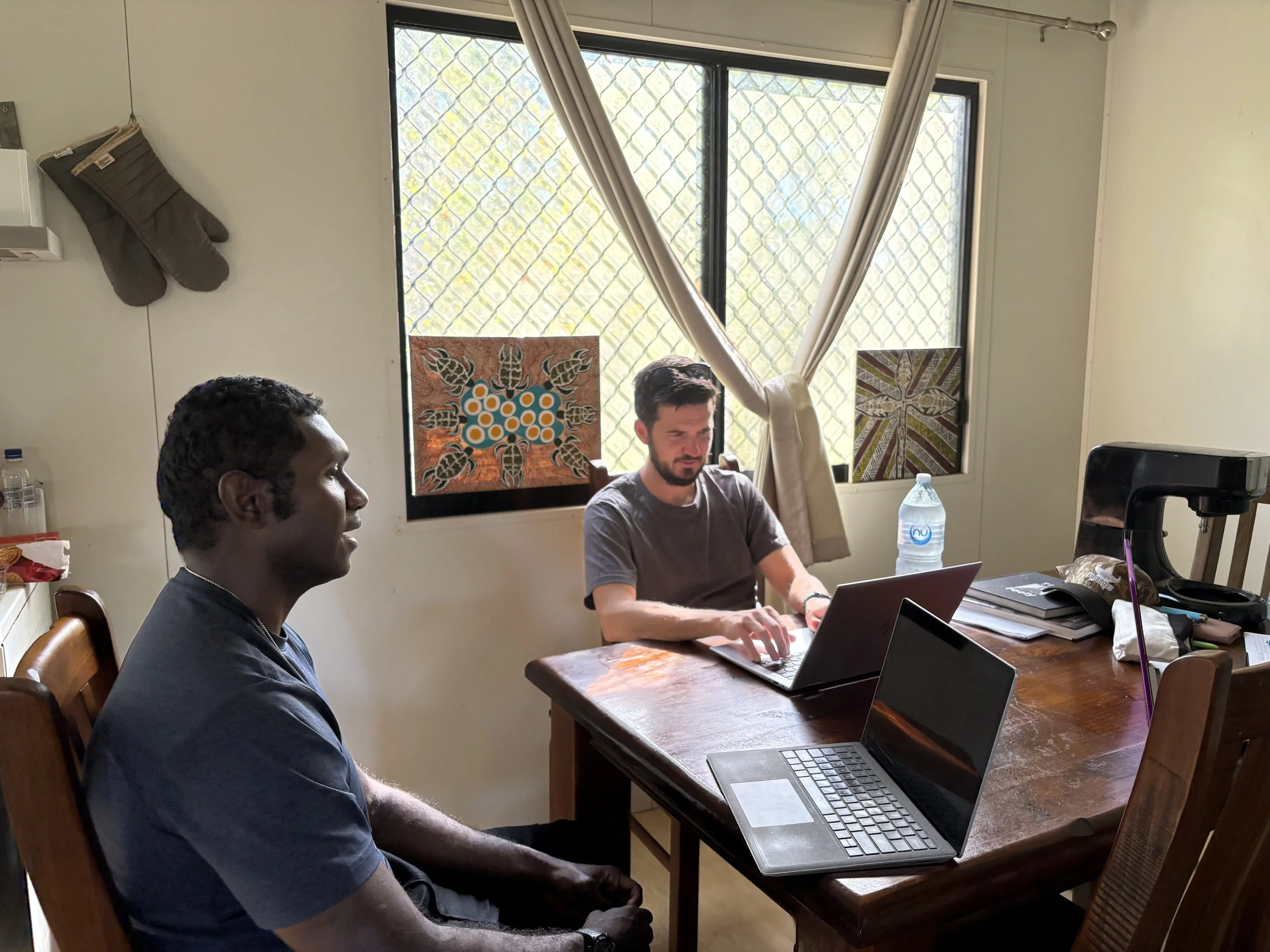
Tiwi leader Norman and skilled volunteer Anthony discussing a business plan.
On Melville Island, Tiwi leader Norman is helping shape a future where young people in Milikapiti can feel supported, connected and proud of who they are.
His vision for a future wellbeing centre reflects what NAIDOC Week has celebrated for 50 years: the strength, leadership and self-determination of Aboriginal and Torres Strait Islander peoples, and the power of community to create change for the next generation.
This year’s NAIDOC Week theme, 50 Years of Deadly, honours the Elders, communities, leaders and organisations that continue to amplify culture and voice, challenge injustice, fight for self-determination and create opportunities for future generations.
At Community First Development, we see this theme lived through our work with community partners, where local leadership, cultural knowledge and trusted relationships guide community-led outcomes.
In Milikapiti, Norman is leading plans to establish the Yirrawiyanga Wellbeing Centre where young people can connect, feel supported, and strengthen their wellbeing while remaining connected to culture, family and community. This matters because social and emotional wellbeing for Aboriginal and Torres Strait Islander peoples is understood holistically, with connection to family, community, culture, Country and spirituality all playing an important role.
Norman’s vision has grown from within the community and is shaped by local knowledge and lived experience. Community First Development’s role is to support that vision through building relationships and providing practical skills and assistance where we are invited to do so.
Recently, Senior Community Development Officer Jacki travelled to Darwin and Melville Island to support a connection between Norman and Community First Development skilled volunteer Anthony. Anthony is providing specialist business planning support that will assist Norman and his community to achieve their aspirations for the Yirrawiyanga Wellbeing Centre.
While they spent time working through the business plan, much of the visit was about building trusting relationships. It created space to spend time together, build trust, share ideas, understand each other’s perspectives, and work through the next steps together.
These moments are critical because relationships are at the heart of effective community development. When communities set the priorities and lead the work, outcomes reflect local knowledge, cultural authority, and the change people want to see.
This approach is also backed by evidence. The National Agreement on Closing the Gap recognises that shared decision-making and the strengthening of community-controlled sectors as priority reforms, acknowledging Aboriginal and Torres Strait Islander people as the primary agents of change in their own communities. Similarly, the Productivity Commission has found that progress depends on governments and organisations moving away from business-as-usual approaches and shifting power to Aboriginal and Torres Strait Islander people, communities and organisations.
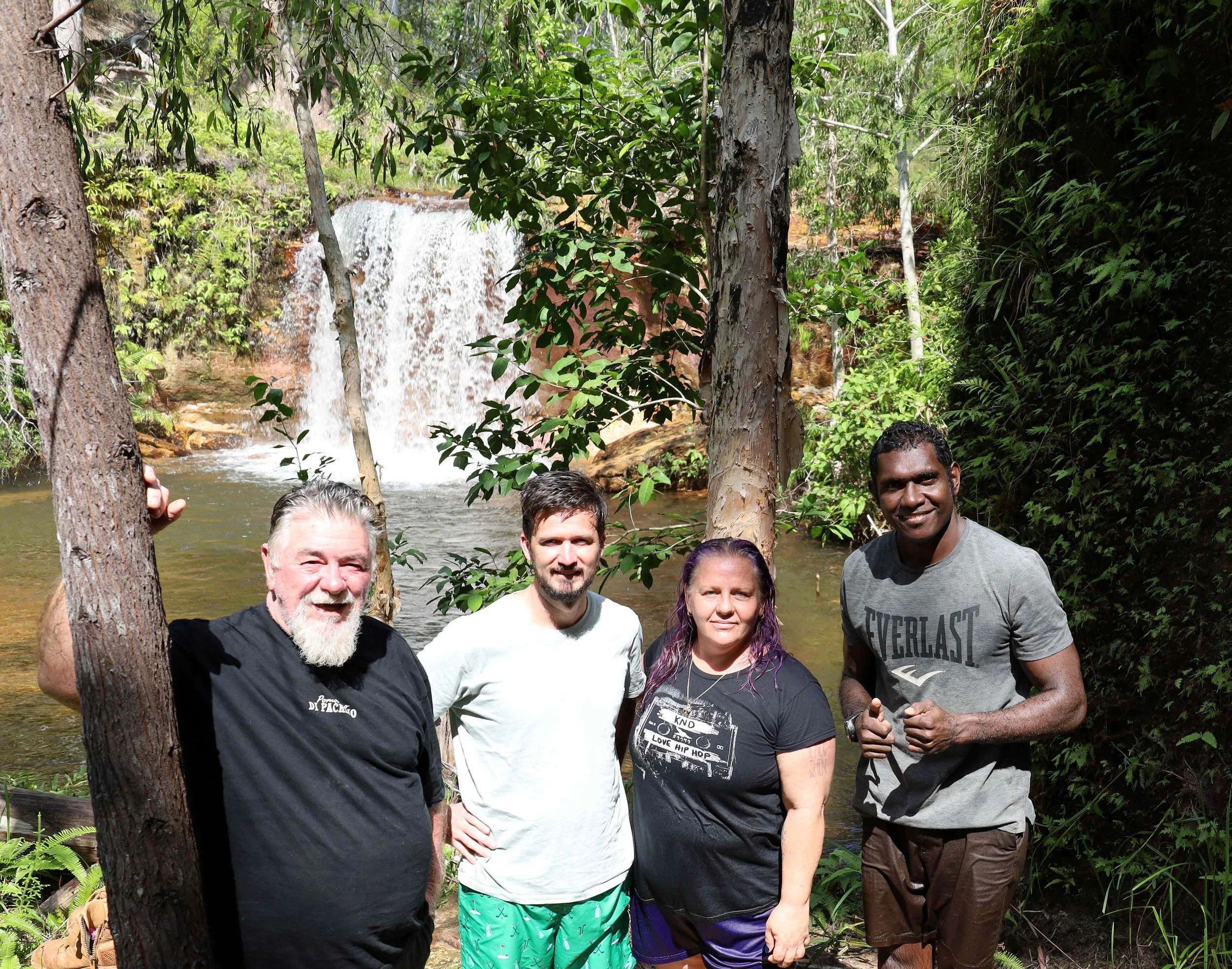
(Left to right): Craig Bate (Tiwi Enterprises, supporting Norman in any way he can), volunteer Anthony, Senior Community Development Officer Jacki, and Norman.
Time on Country was another important part of the visit.
Whether it was watching local football or spending time with family on Norman’s homelands, every experience reinforced something communities have always known - culture, Country and connection are strengths. They build belonging, strengthen identity and support wellbeing.
The evidence reflects what community leaders have long known. Programs that strengthen cultural identity, cultural continuity, and place-based connections can support wellbeing for young mob. This is why a locally led Wellbeing Centre in Milikapiti is not just about having access to a particular service. It is about creating a culturally grounded space shaped by local priorities, relationships, and knowledge.
The visit also brought together other respected community leaders who back Norman’s vision. Their support is a reminder that strong communities are built collectively. Leadership is shared, knowledge is passed on, and change happens because people continue showing up for one another.
As we celebrate 50 Years of Deadly, Norman’s vision for the Yirrawiyanga Wellbeing Centre reminds us that the future has always been built in community and led by community.
For Community First Development, that is what our work is about: backing the leadership that already exists. Listening before acting. Building trust before starting projects. Walking alongside communities as they continue leading change on their own terms.